
Choosing a wood finish: veneer, solid wood, lacquer and oil
A practical guide to wood finishes for doors, furniture and panelling: solid wood or veneer, book-matching, lacquer versus oil, sheen levels and care.

Two decisions shape how a piece of joinery looks and lasts: what the wood surface is made of, and what is applied over it. Walnut panelling, an oak door and a lacquered wardrobe can look completely different depending on those choices, even in the same timber.
Solid wood or veneer
Solid wood is timber all the way through. It can be shaped, sanded and refinished many times, and edges and corners show the real grain. It also moves with humidity, which limits how large a solid panel can be before it cups or cracks.
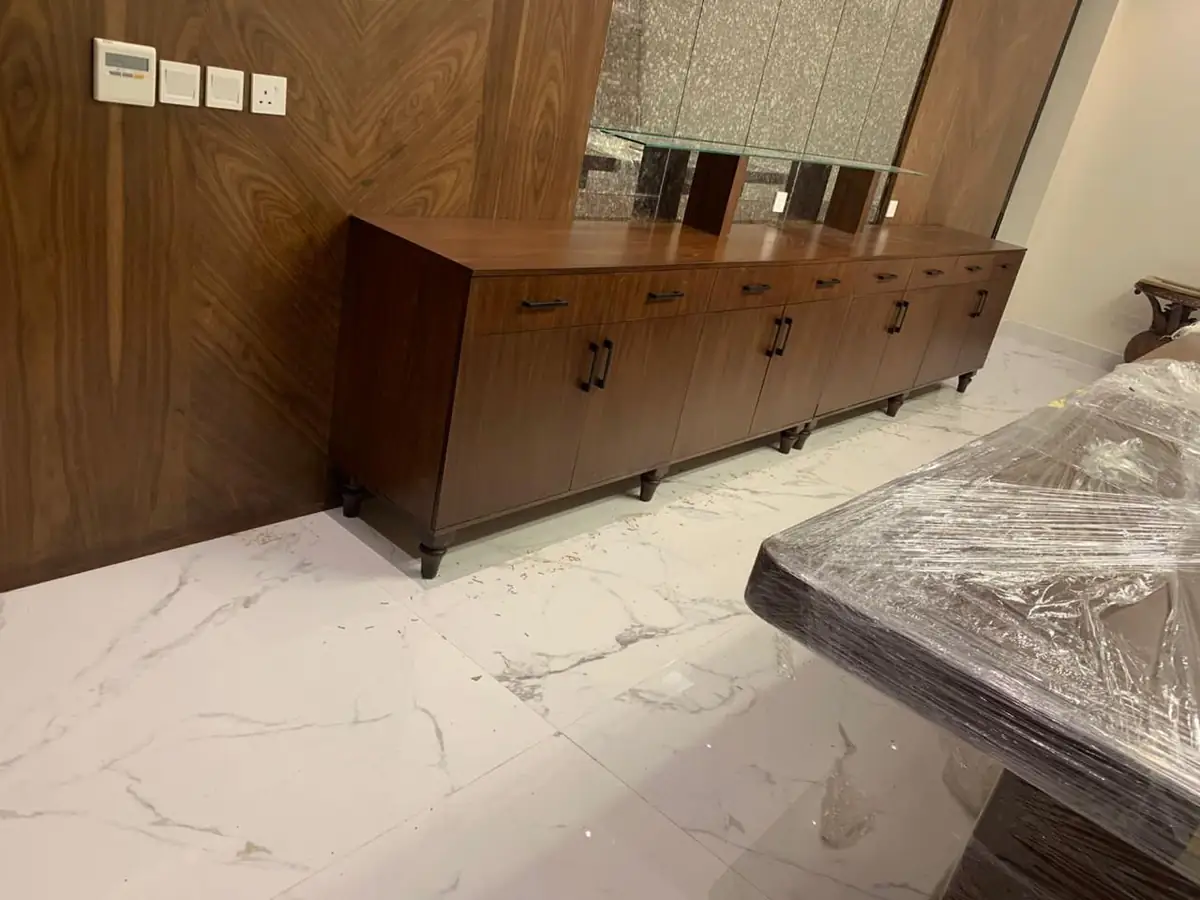
Veneer is a thin slice of real timber bonded to a stable board. It is not an imitation: it is the same wood, cut so one log covers much more surface. Veneered panels stay flat in large sizes, and the grain can be arranged deliberately. Most high-end panelling and large doors are veneered for exactly these reasons.
A common approach is to combine them: veneered panels with solid timber edges where they are touched or likely to be knocked.

Book-matching and grain
Because veneer leaves come from the same log in sequence, they can be laid as mirror images of each other. Book-matching creates a symmetrical pattern across a pair of panels; slip-matching repeats the grain side by side. On a whole wall, matching the grain across every panel is what makes walnut panelling look like one piece of wood.
Lacquer or oil
Lacquer forms a protective film on the surface. It resists stains and moisture and is easy to wipe clean, which suits kitchens, wardrobes and tables. It comes in levels of sheen, from almost invisible matt to high gloss.
Oil soaks into the wood and hardens there. It looks and feels more natural, with no film on top, and small scratches can be repaired locally. It needs re-oiling more often and marks more easily from water and heat.
Opaque lacquer covers the grain entirely in a colour, useful for a painted wardrobe or a lacquered wall unit.
Choosing the sheen
Matt and satin finishes hide fingerprints and small scratches and suit most homes. Gloss reflects light and shows every mark, so it is best kept for small areas or pieces that are rarely touched.
Caring for wood
Dust with a soft dry cloth, wipe spills promptly, and keep wood out of direct sun where possible, because ultraviolet light changes its colour over time. Avoid harsh cleaners on oiled surfaces.
See the walnut joinery in our Al-Malqa palace project, and read about slatted timber walls and timber pivot doors. Ask us for samples of the timber and finish you are considering.
Common questions
Is veneer real wood?
Yes. Veneer is a thin slice of real timber bonded to a stable board. It stays flat in large panels and lets the grain be matched deliberately.
Should I choose lacquer or oil?
Lacquer resists stains and moisture and suits kitchens, wardrobes and tables. Oil looks more natural and is easy to repair, but needs re-oiling more often.
What is book-matched veneer?
Consecutive veneer leaves laid as mirror images of each other, creating a symmetrical grain pattern across a pair of panels.