
Timber wall cladding: what to decide before it is made
A practical guide to interior timber cladding: solid wood or veneered panels, panel layout, fixing, finishes, and coordinating with lighting and services.
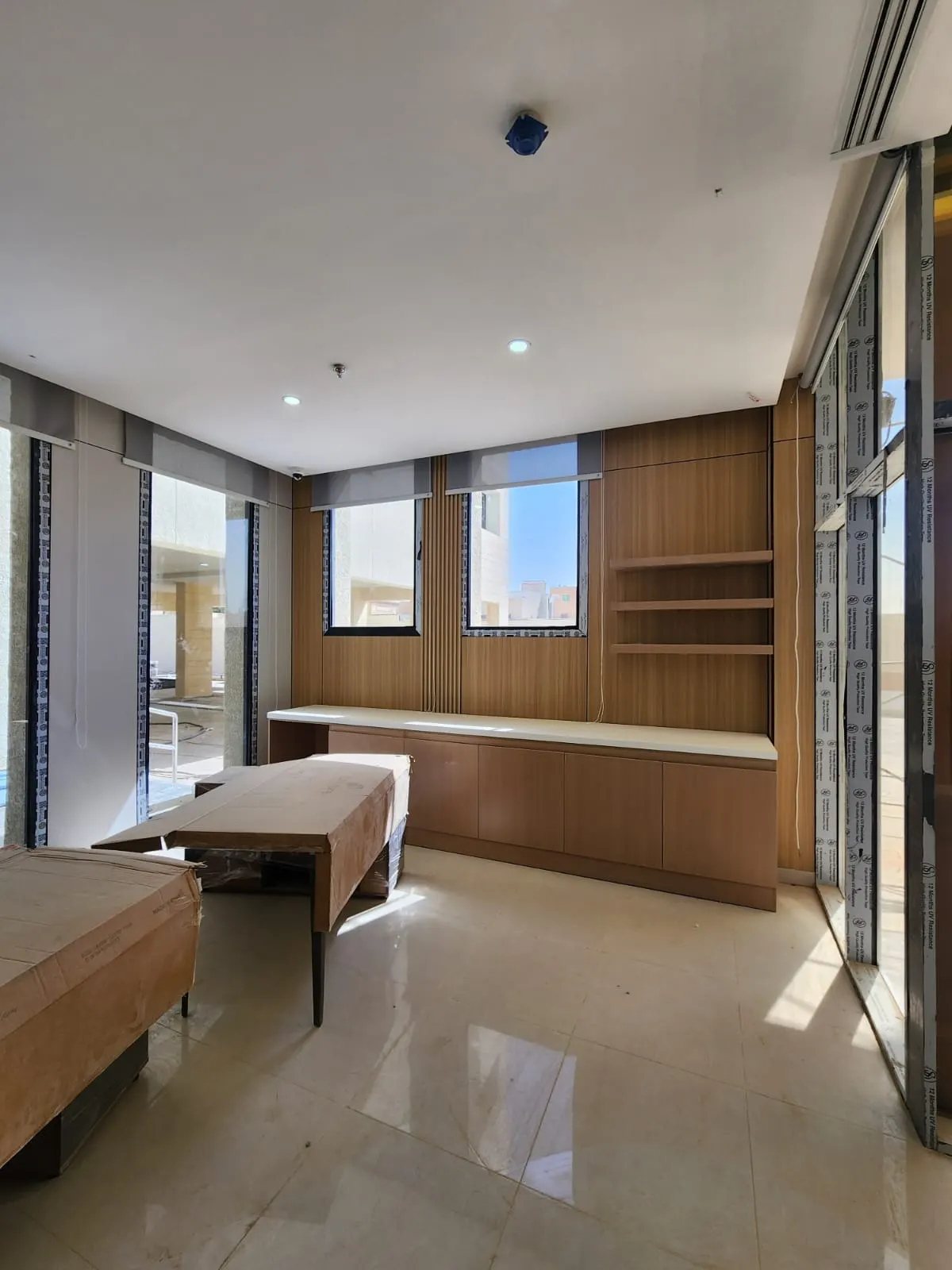
Timber cladding changes a room more than almost any other finish: it adds warmth, softens sound and gives walls a clear rhythm. It also commits you early — once panels are cut to size, changes are expensive. These are the decisions worth making before fabrication.
Solid wood or veneered panels
Solid timber shows real grain through its full thickness and can be sanded and refinished, but it moves with humidity and needs room to expand. Veneered panels — a thin layer of real wood on a stable core board — stay flat over large areas, cost less and keep the grain consistent from panel to panel. For most interiors, veneered panels are the practical choice; solid wood suits details people touch, such as handrails, edges and doors.
Layout and joints
Decide the panel module before anything else: the panel width, the direction of the grain, and where joints fall. Joints should line up with doors, windows and ceiling lines, so the wall reads as one composition rather than a patchwork. Vertical slats add height to a room; horizontal panels make it feel wider.
Fixing
Panels are usually fixed to a concealed framework rather than glued straight to the wall. The framework corrects uneven walls, leaves a gap for ventilation, and lets a damaged panel be removed and replaced without disturbing the rest.
Finishes
- Matt lacquer: the most natural look; suits offices and living spaces.
- Satin or gloss: easier to wipe clean, but shows every scratch.
- Oil: deepens the grain and is easy to touch up, with more frequent upkeep.
Ask to see a finished sample on the actual veneer before approving: the same finish looks different on different woods.
Coordinate with lighting and services
Switches, sockets, air-conditioning grilles and lighting all pass through the cladding. Mark their positions on the drawings before the panels are cut, so openings are machined cleanly in the workshop instead of cut on site. Integrated lighting — a lit shelf or a recessed strip — needs to be planned at the same stage.
Before you request a quote
Have the wall dimensions, the ceiling height, photos of the room and any reference images of the look you want. With the module and the service positions agreed early, the panels arrive ready to fit.
Common questions
Should wall cladding be solid wood or veneer?
Veneered panels stay flat over large areas and cost less. Solid timber can be refinished but moves with humidity and needs room to expand.
How are cladding panels fixed?
To a concealed framework that corrects uneven walls, leaves a ventilation gap and lets a damaged panel be replaced on its own.
What should be decided before panels are cut?
The panel module and joint positions, and the positions of switches, sockets, grilles and lighting, so openings are machined in the workshop.