
Ornamental iron gates: design, fabrication and finish
How to design an ornamental iron gate that lasts: sizing and swing, laser-cut versus hand-forged ornament, automation, and finishes that stand up to Riyadh's climate.

A gate is the first thing a visitor sees of a villa, often before the house itself. An ornamental iron gate can carry the character of the whole facade: a crest, a geometric pattern that repeats in the windows, or gilded detail that matches the lighting. Getting it right is half design and half engineering.
Start with size and swing
Settle the practical questions before the pattern:
- Clear width. Allow for the cars that will use it, plus room to turn in from the street.
- Swing or slide. A swing gate needs a clear arc inside the boundary. Where space is short, or the drive slopes, a sliding gate is usually the better choice.
- Pedestrian door. A separate wicket door means the main gate is not opened for every visitor.
A large double gate is heavy. Its posts and foundations must be designed for that weight, and for wind on a solid gate, or the leaves will drop and stop meeting in the middle.
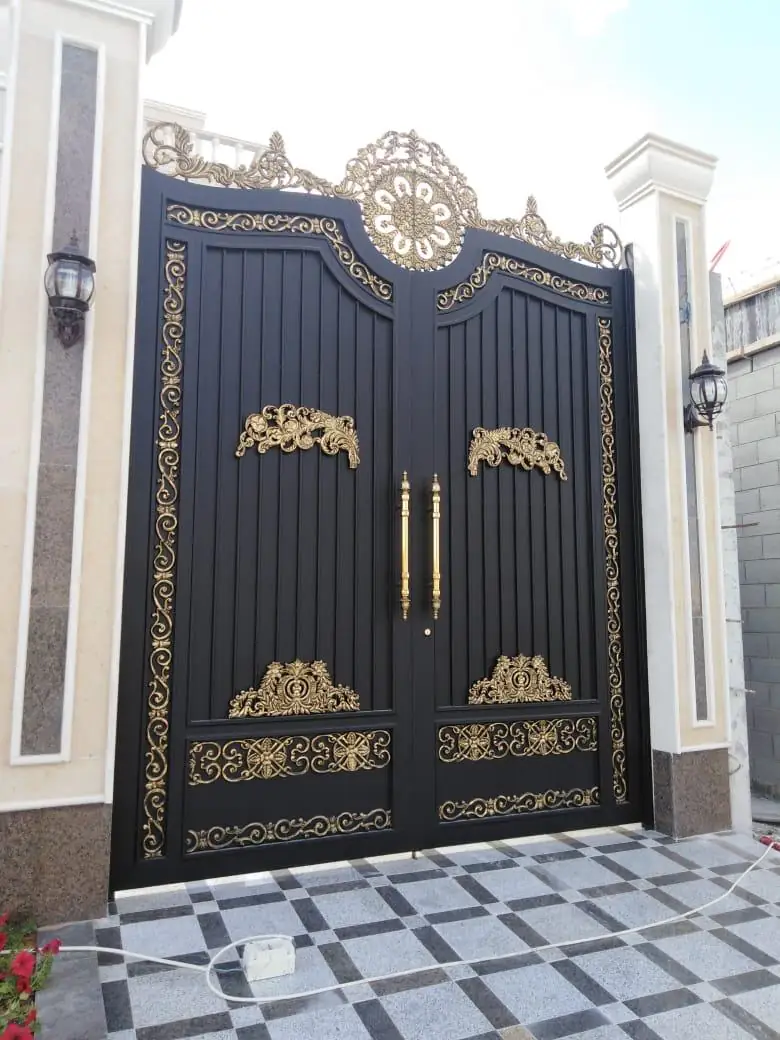
Ornament: laser-cut, forged or cast
There are three ways to make the decoration, and many gates mix them:
- Laser-cut panels. Patterns are cut from steel sheet with precise, repeatable edges. This suits geometric and Islamic patterns, and the same pattern can be repeated in screens and balcony panels for a consistent facade.
- Forged and bent bar. Scrolls and spears formed from bar give the traditional wrought-iron look and real depth.
- Cast elements. Rosettes, finials and crests are cast and welded into the frame.
Ask to see the pattern drawn at full scale on the gate. A motif that looks right on a small sketch can become too busy, or too sparse, at three metres.

Automation
If the gate will be motorised, decide before fabrication. The motor type, the hinge or track, the safety sensors and the cable route all affect the frame, the posts and the paving. Adding them after the gate is installed often means cutting into a finished surface.
Finishes for a hot, dusty climate
Iron left bare will rust, and the joints rust first. A durable gate is galvanized or blast-cleaned, primed and then powder-coated or painted with an exterior system. Gilded ornament is picked out after the base coat, and needs a clear protective layer to keep its shine. Plan for an inspection every year or two, touching up any chip before rust gets under the coating.
See finished examples in our ornamental iron gates project, and how we protect steel in galvanizing versus painting.
Before you request a quote
Send the opening width and post-to-post dimension, photos of the boundary wall and drive, whether you want it automated, and any pattern you have in mind. Contact us and we will prepare a drawing for you to approve before anything is cut.
Common questions
Should I choose a swing gate or a sliding gate?
A swing gate needs a clear arc inside the boundary. Where space is short or the drive slopes, a sliding gate is usually the better choice.
What is the difference between laser-cut and forged ornament?
Laser-cut panels give precise, repeatable patterns that suit geometric and Islamic designs. Forged bar gives scrolls and spears with the depth of traditional wrought iron.
How do I stop an iron gate from rusting?
Galvanize or blast-clean it, prime it, then powder-coat or paint it with an exterior system. Inspect it every year or two and touch up chips before rust spreads.