
How to choose aluminum windows for your project
A practical guide to specifying aluminum window systems: profile, glazing, thermal break, and what actually changes insulation and day-to-day operation.
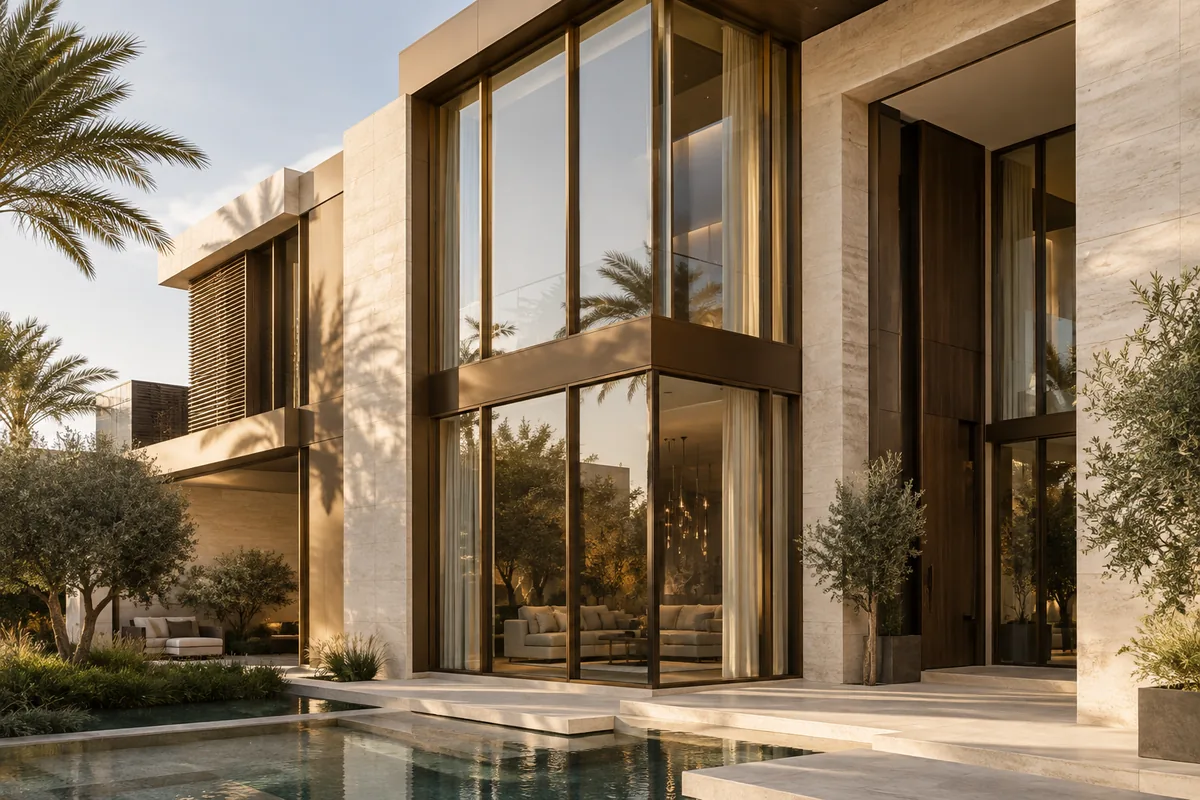
Specifying an aluminum window does not start with how it looks. It starts with how it is used: where the opening sits, how many hours of sun it takes, and whether it is opened daily or stays fixed. Those three questions settle the profile and the glazing before any aesthetic decision.
Profile before glass
The profile is the metal frame carrying the glass. The thicker it is, and the more internal chambers it has, the better it insulates and the larger the spans it can hold. Residential projects are usually well served by a mid-weight profile; large facades need a heavier one to carry the weight of double glazing.
Thermal break: when is it worth it?
A thermally broken profile separates the outer and inner halves with an insulating strip, so outside heat does not travel straight through the metal. In a hot climate this is not a luxury — the difference shows up directly in cooling load, and in condensation on the frame during winter.
Glazing
- Single: interior spaces and partitions only.
- Double: the default for external windows; insulates against both heat and sound.
- Double with a reflective coat: for facades taking direct sun all day.
Daily operation
The opening system follows the use: casement insulates better but needs clearance to swing, while sliding saves space and suits wide openings. The hardware — handle, hinge, lock — is what wears first, so specifying it well is what prevents an early replacement.
Before you request a quote
Have the clear opening dimensions ready, the orientation of each facade, and site photos where available. That information alone removes several rounds of revision and gets you an accurate specification the first time.